

Extreme Heat
Extreme heat is defined as days with temperatures above 95˚F. Do your part to make sure you are prepared for extreme heat.
-
Before Extreme heat
- Learn to recognize the signs of heat illness
- Ex: Hot dry skin, Confusion, Loss of consciousness, Dizziness = Heat stroke
- Ex: Dizziness, Thirst, Heavy Sweating, Nausea, Weakness = Heat Exhaustion
- Cover any windows with drapes or shades
- Add insulation to keep any excess heat out
- Identify cool places in your community where you are able to go to
- Check on any elderly neighbors or individuals with access & functional needs to ensure they have everything they need for the weather
- For more tips on how to protect yourself and others during Extreme Heat, visit: https://www.weather.gov/safety/heat
- Learn to recognize the signs of heat illness
-
During Extreme Heat
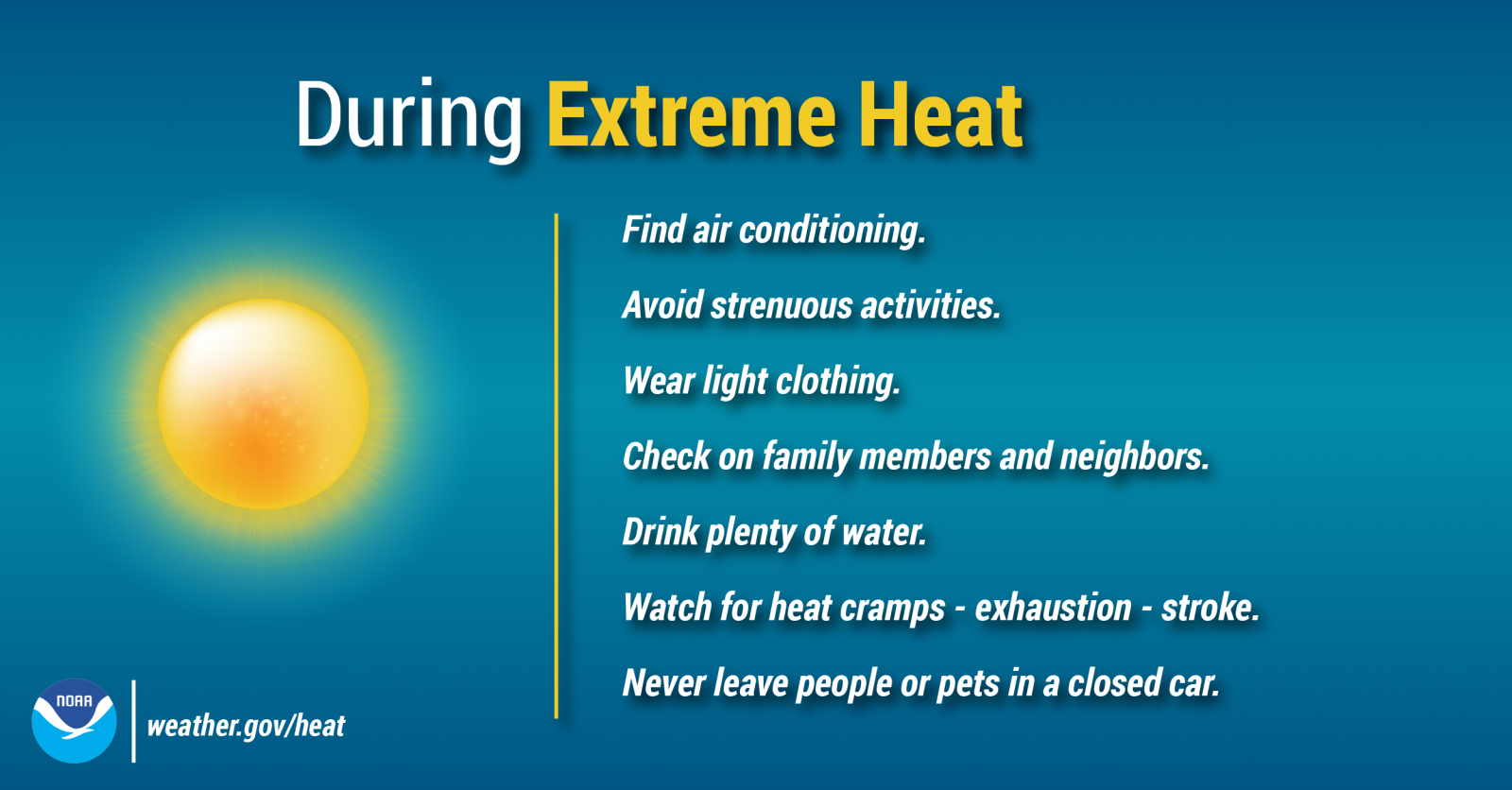
- Wear loose, lightweight, light-colored clothing. Darker clothing can absorb more sunlight instead of reflecting. This heat transfers directly into your body.
- If you are outside, find shade or wear a hat wide enough to protect your face from the sunlight
- Drink plenty of fluids to stay hydrated
- Avoid high-energy activities or outdoor work if possible
- Watch for any signs of heat cramps, heat exhaustion, or heat stroke
- Consider your pets needs. Make sure your pets have access to cool water and avoid letting them walk on asphalt or dark pavement.
- Heat Wave’s may also create power outages. For more information on this, visit our power outage section.
- If you believe that someone is experiencing signs of heat illness or a medical emergency, please call 9-1-1.
-
After Extreme Heat
- Make or update your family communication plan
- Teach children the importance of 9-1-1 and when is the right time to call
- Create a family safe phrase to prevent your children from going with strangers
- Practice your family evacuation plans with your children on a regular basis
- To learn more on how protect yourself, visit the CDC Extreme Heat webpage
-
Cooling Stations by County
- Will be updated when available
-
Offices of Emergency Management by County
- To view each office of Emergency Management by County, click here.
-
Additional Resources
- DelDOT Bus Route Schedule
- DEMA Social Media Channels
- Department of Health and Social Services
- DE 2-1-1
- Dial 2-1-1, 1800-560-3372
- Text your zip code to 898-211
- Official Delaware 211 Website
- American Red Cross Heat Safety Tips