Community Emergency Response Team
 Natural hazards, Human-caused incidents and Technological hazards can all create emergency and disaster situations without warning, often leaving individuals, families and communities unprepared.
CERT provides a structured approach following the National Incident Command System (ICS) and the National Incident Management System (NIMS) for disaster response preparedness, ensuring that members of a community are not just passive bystanders but can be active participants in their own safety and well-being.
What is CERT?
The Community Emergency Response Team (CERT)
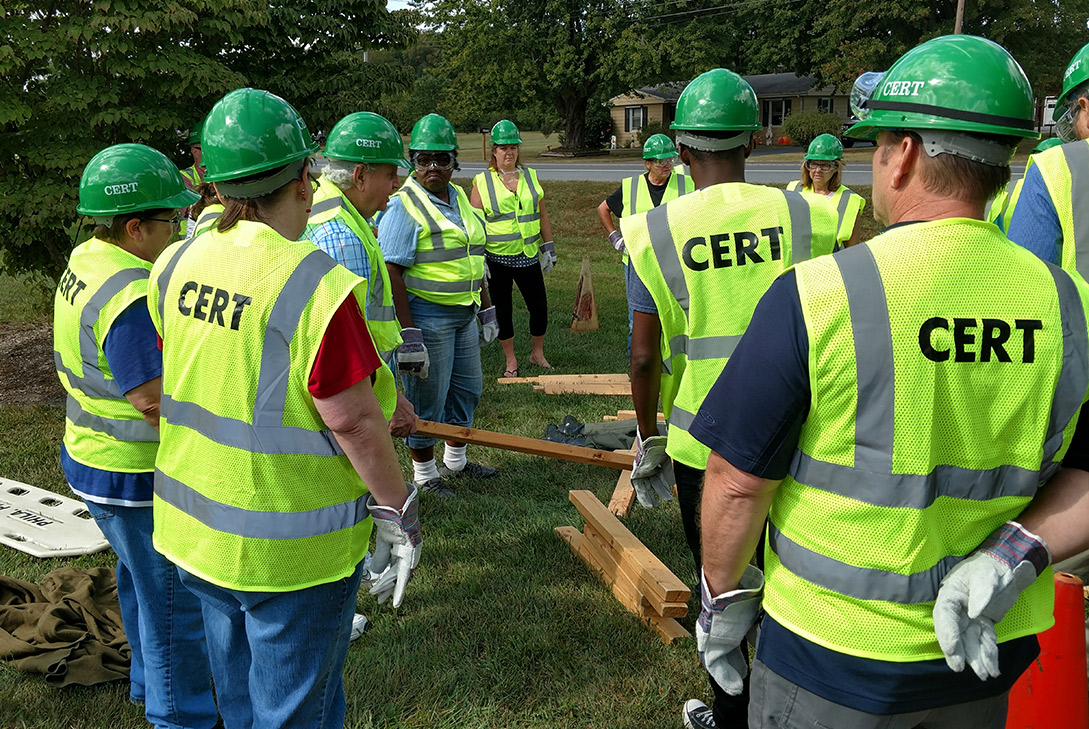 is a nationally supported, locally implemented emergency and disaster training program that combines classroom and hands-on instruction to prepare you to help yourself, your family, and your neighbors in the event of an emergency.
Why it Matters:
- In 95% of emergencies, bystanders or victims themselves are the first to provide emergency assistance or to perform a rescue.
- In the aftermath of a major large-scale disaster, it may take up to 72 hours or more for assistance to reach your community.
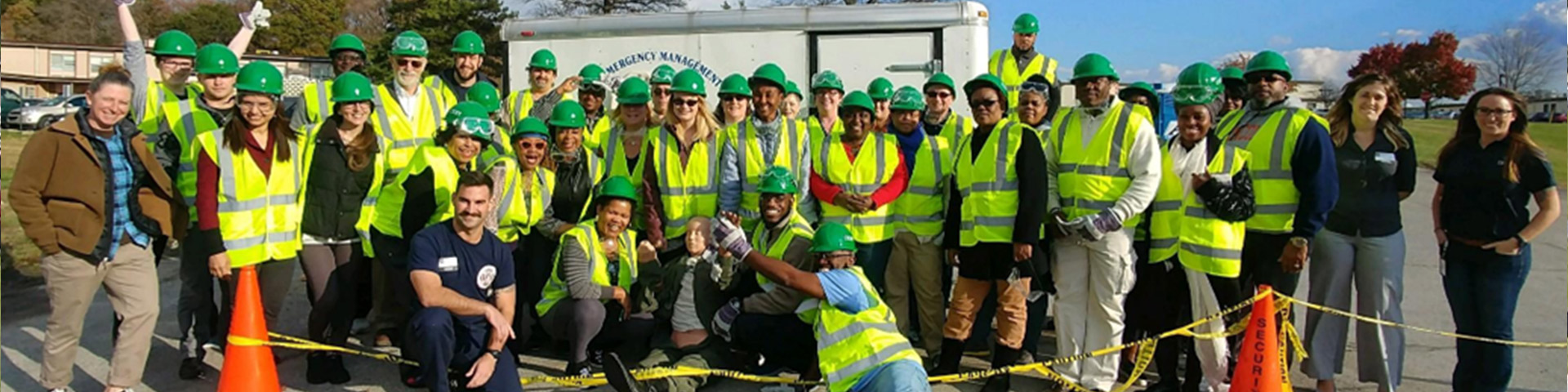
If a disaster happens, CERT members are prepared and can apply the learning they have received to give critical basic support to their family, loved ones, neighbors or associates until help arrives.
CERT Basic Training
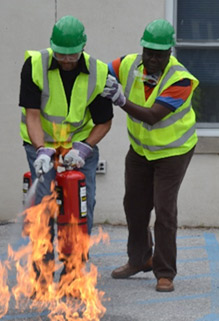 The free CERT Basic Training is the cornerstone of the program.
The training includes research-validated subject matter to teach participants what to do before, during and after disasters from hazards their communities may face.
This 18 – 20 hour training combines classroom and hands-on activities with a culminating disaster simulation exercise to provide critical basic skills in emergency preparedness and response.
The purpose of the training is to enable individuals to safely respond, of their own accord as a Good Samaritan, to help themselves and those around them when professional responders are not immediately available.
The CERT Basic Training Includes 9 Instructional Units:
-
Unit 1: Disaster Preparedness.
During this unit, participants discuss the different vulnerabilities that their community faces, actions that can be taken to prepare before a disaster occurs, and different laws that protect CERT volunteers.
-
Unit 2: CERT Organization.
During this unit, participants learn in greater depth the organization of the CERT and the importance of the incident command system (ICS).
-
Unit 3: Disaster Medical Operations I.
During this unit, participants learn about basic triage, techniques to address airway, blood loss and temperature with rapid treatment techniques.
-
Unit 4: Disaster Medical Operations II.
Participants learn about head-to-toe assessments, setting up treatment areas, first aid, and how to deal with sanitary issues.
-
Unit 5: Disaster Psychology.
During this unit, participants learn different critical signs related to mental health during and after an event, how it impacts those involved in the disaster, responders and themselves.
-
Unit 6: Fire Safety and Utility Controls.
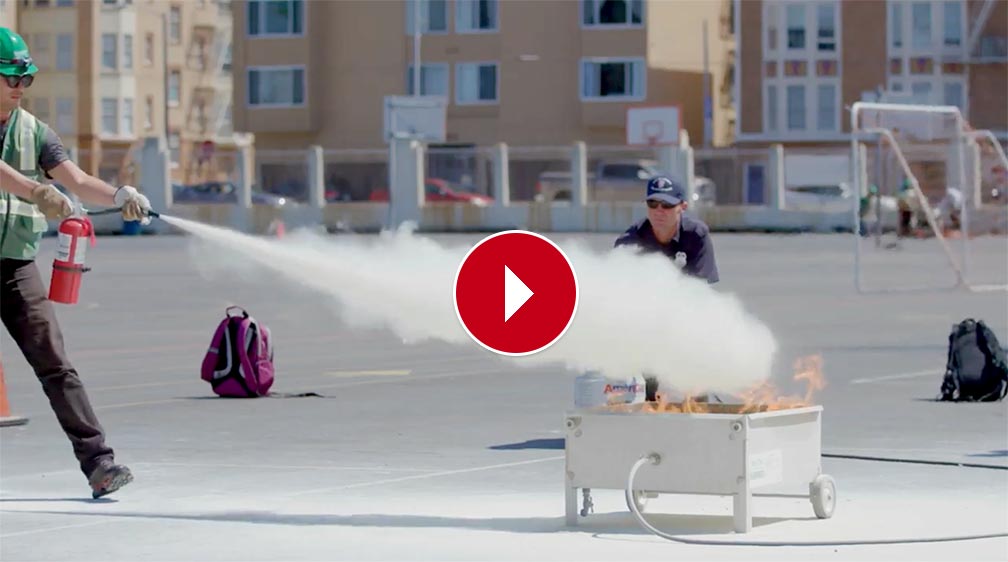
Participants will learn basic fire chemistry, hazardous materials, fire hazards, and fire suppression strategies. Participants will learn and demonstrate the proper use of fire extinguishers and how to size up a scene to make sure it is safe to enter. In addition, they will learn the proper technique of when and how to turn off certain utilities.
-
Unit 7: Light Search and Rescue.
Participants learn basic search and rescue techniques including size up, ways to carry victims, how to safely enter an area, rescue techniques, and how to keep themselves and others safe.
-
Unit 8: Terrorism and CERT.
Participants will learn about the eight signs of terrorism and what they should and should not do in the case of a terrorist attack informing them of their role in terror incident.
-
Unit 9: Course Review and Disaster Simulation.
During this until, participants have an opportunity to ask questions about the training and to review the material. In addition, they take part in a disaster simulation where they can apply the knowledge and experience gained through the training.
Anyone 18 years or older can attend the training without restrictions. TEEN CERT programs or opportunities may be available.
Start Your CERT Journey
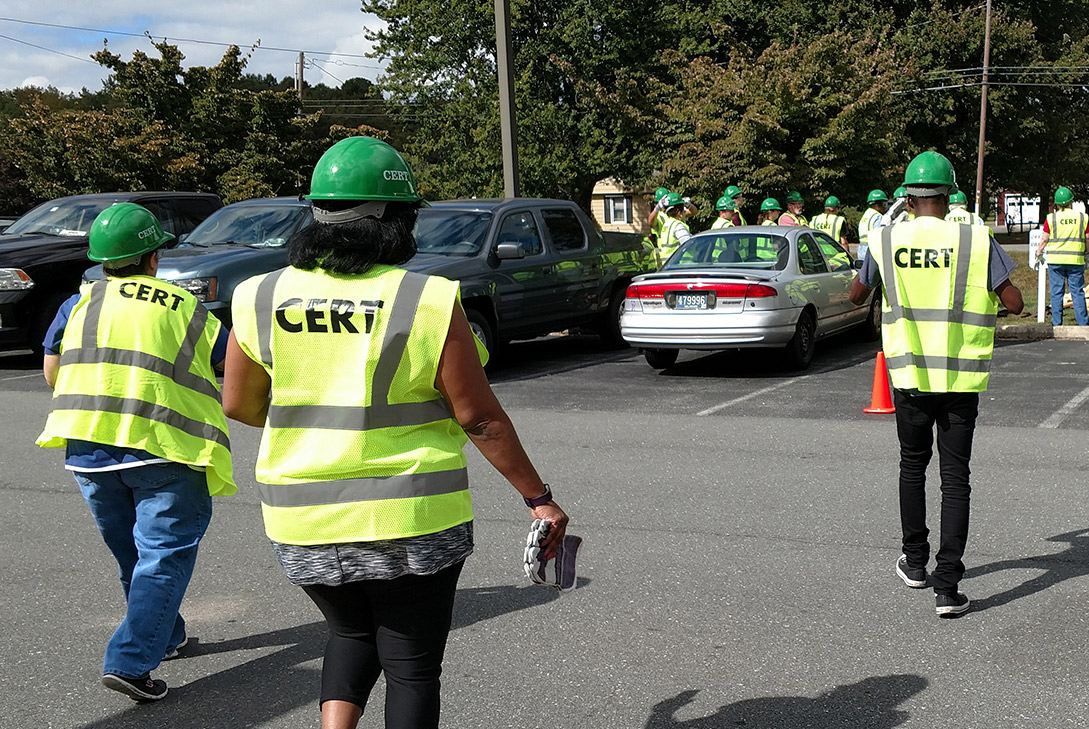 The important skills learned in the CERT Basic Training are the starting point for your CERT journey – as an individual or as a member of a CERT team.
To Apply:
Delaware Statewide CERT Registration/Application Link opens in a new tab
CERT has been around for 40 years having started in California and has grown to over 2,700 CERT teams and more than 600,000 people trained nationally.
The nationally tested curriculum and content is taught to better prepare you as an individual to help yourself and those around you in an emergency.
Should you choose, your graduation from the training is also the entry point for joining a CERT team and the additional service and emergency training opportunities as an active CERT Program Volunteer in your community.
After you submit the form, you will be contacted by your local CERT with information on upcoming CERT Basic Trainings and other CERT opportunities!
Not a CERT Near you? Consider Starting a CERT Program for your Community, Workplace, Campus.
How You Can Participate in CERT
 Choose Your Level of Participation
- CERT Basic Training Only – Personal Preparedness:
You may choose to only attend the CERT Basic Training for personal preparedness.CONGRATULATIONS! – you will be better prepared for emergencies that may occur and be better able to care for those around you! - Join a CERT Program or TEAM:
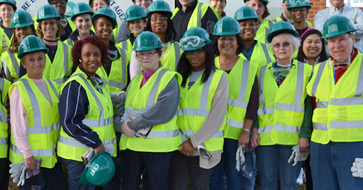 Join other CERT graduates and help in your community. CERT Programs provide a wide variety of ways to use your CERT skills to benefit the larger community and can provide additional emergency training opportunities. CERT volunteers help at community events, teach emergency readiness education and outreach programs, help run the CERT Program, provide first aid or medical support, among others. Learn About CERT Member Volunteer Activities Link opens in new tab
- CERT Deployment Team Volunteer
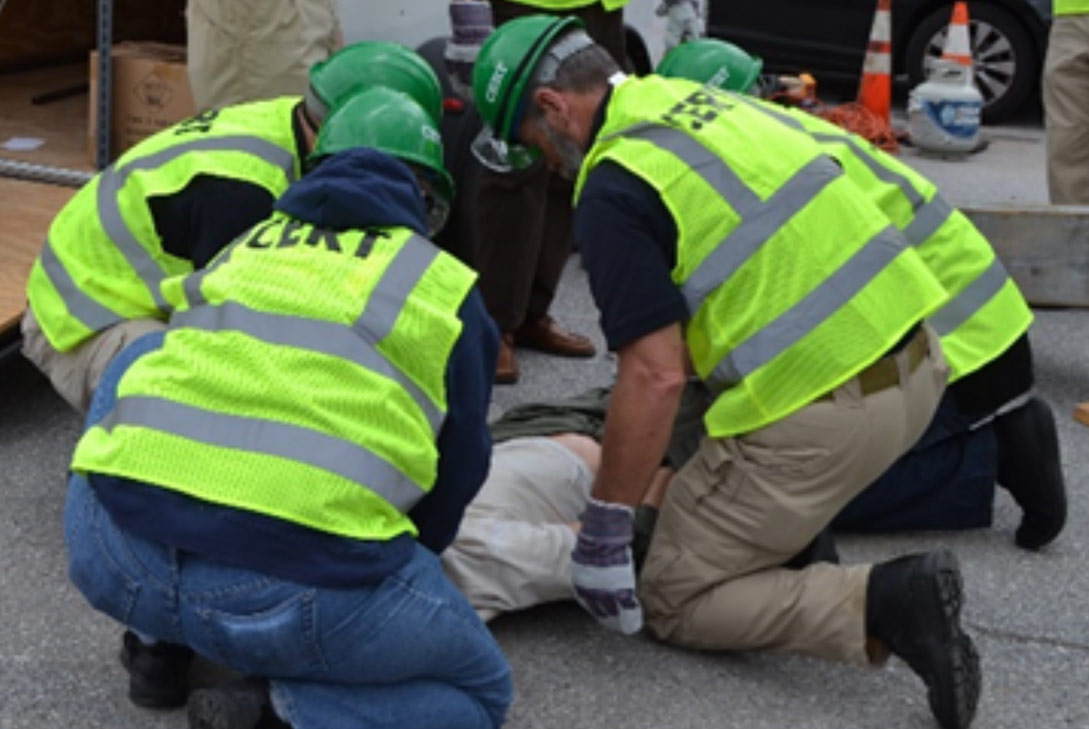 For those interested in learning advanced emergency skills and in helping First Responders in the greater community. CERT Deployment Team Volunteers are active CERT volunteers who undertake advanced Sponsor required trainings, credentialing, and selection to be enrolled as a member of a response team which may be called-up and deployed by the Sponsor during emergency activations including at locations outside the local community.
NOTE: ALL CERT graduates may utilize CERT learned skills to safely respond, of their own accord as a Good Samaritan, to help themselves and those around them when professional responders are not immediately available.
No CERT members or Teams may self-deploy to an emergency or disaster site away from their current location.
Who Should Take CERT Training?
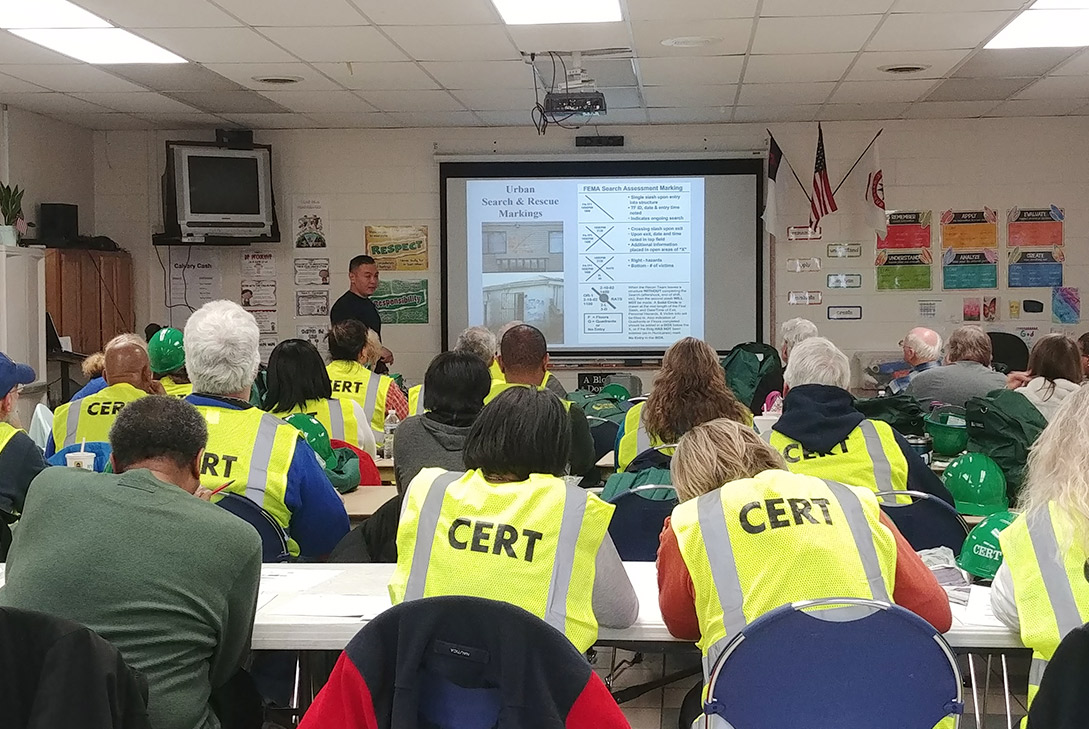
- People interested in taking an active role in hometown preparedness
- Neighborhood Associations/ Communities
- Apartment/ high rise dwelling communities
- Businesses and workplaces
- Students, teachers, and administrators
- Community leaders
- Parents
- Places of Worship
- Scouting and youth organizations
- Members of clubs and civic organizations
Other Ways to Be CERT Involved
Become a CERT Trainer
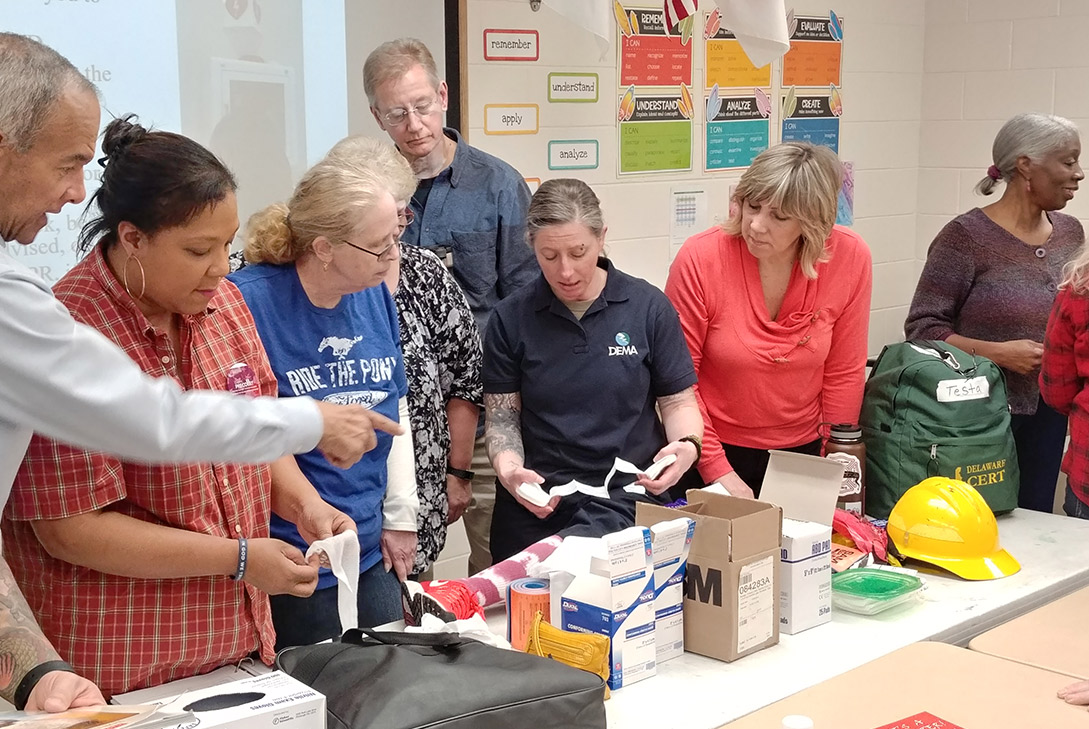 CERT MOTTO: The Greatest Good for the Greatest Number.
Great CERT training starts with great CERT Trainers!
Share your experience and knowledge with eager participants who want to be prepared and help their communities.
Learn more below about how you can join our team of instructors teaching emergency preparedness in CERT classes statewide.
Pathway to Forming a CERT Program
Would my Community Benefit from a CERT Team?
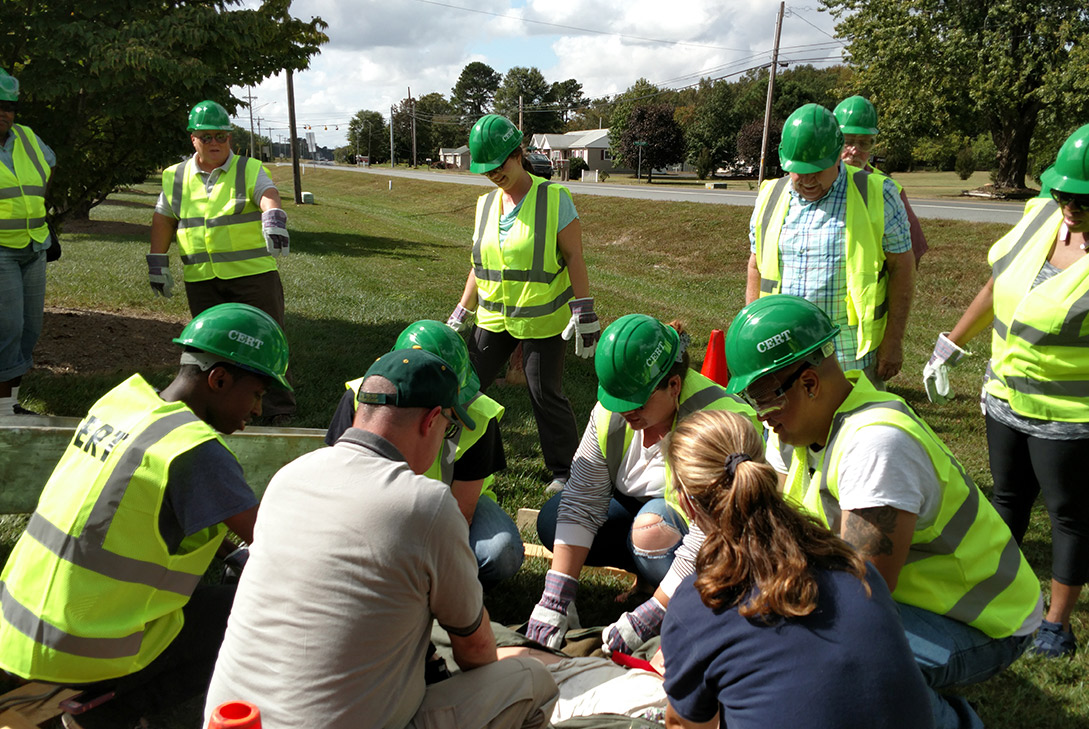 (Neighborhood, HOA, Apartment/Highrise, School, Workplace, Place of Worship)
If there isn’t already a CERT active in your community and you think your Community, Workplace, Campus, place of Worship could benefit from a CERT Program, consider starting a CERT.
CERT programs are adaptable allowing the structure to meet the needs of many communities and can be customized if the community might better be characterized as Workplace, Campus, or Teen based on the location and potential participants.
Types of CERT Programs
Community – However you define this- maybe a Neighborhood, Apartment, Highrise, development, HOA, and others – for the development of a team within your defined community made up of community residents who train and organize to use CERT skills.
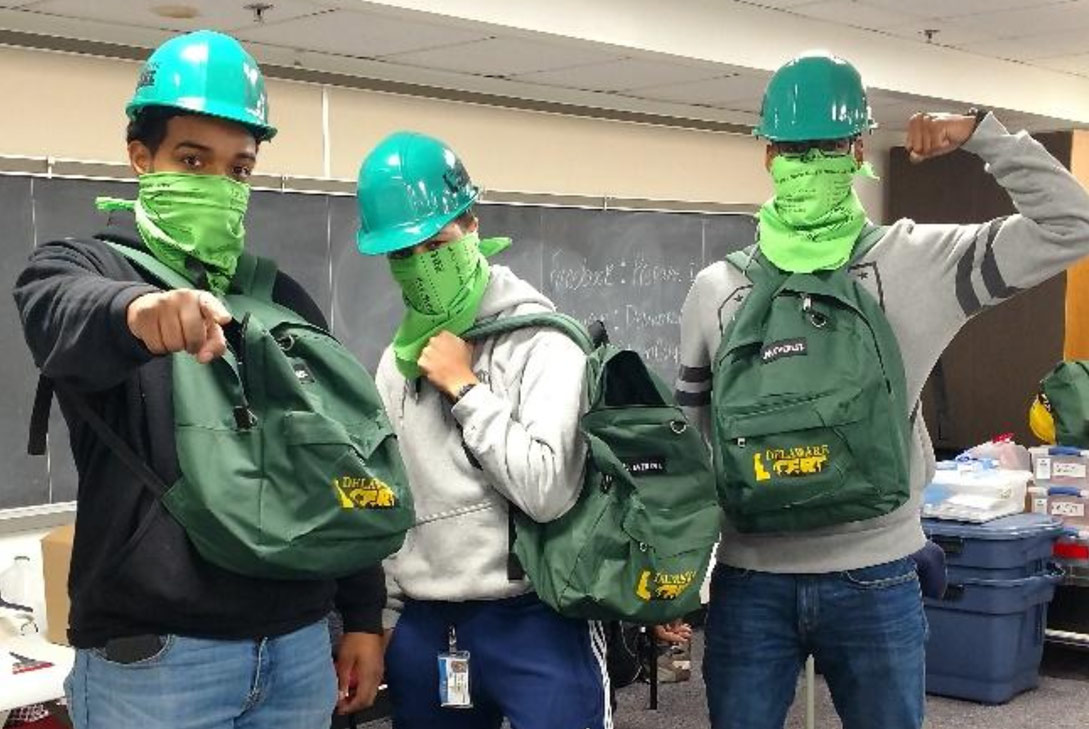 For Teens – trains students in emergency preparedness and basic response to ensure that they have the skills needed to protect themselves and assist others in the event of an emergency in support a school’s emergency operations plan and assist emergency services personnel, thus providing valuable surge capacity to local first responders when needed. Additionally, TEEN CERT can offer students exposure to careers in emergency management or as first responders. The Program is expected to generally limit their activities to the school property.
On College Campuses – supports and enhances existing emergency management capabilities by increasing the preparedness and resilience at a college or university campus.
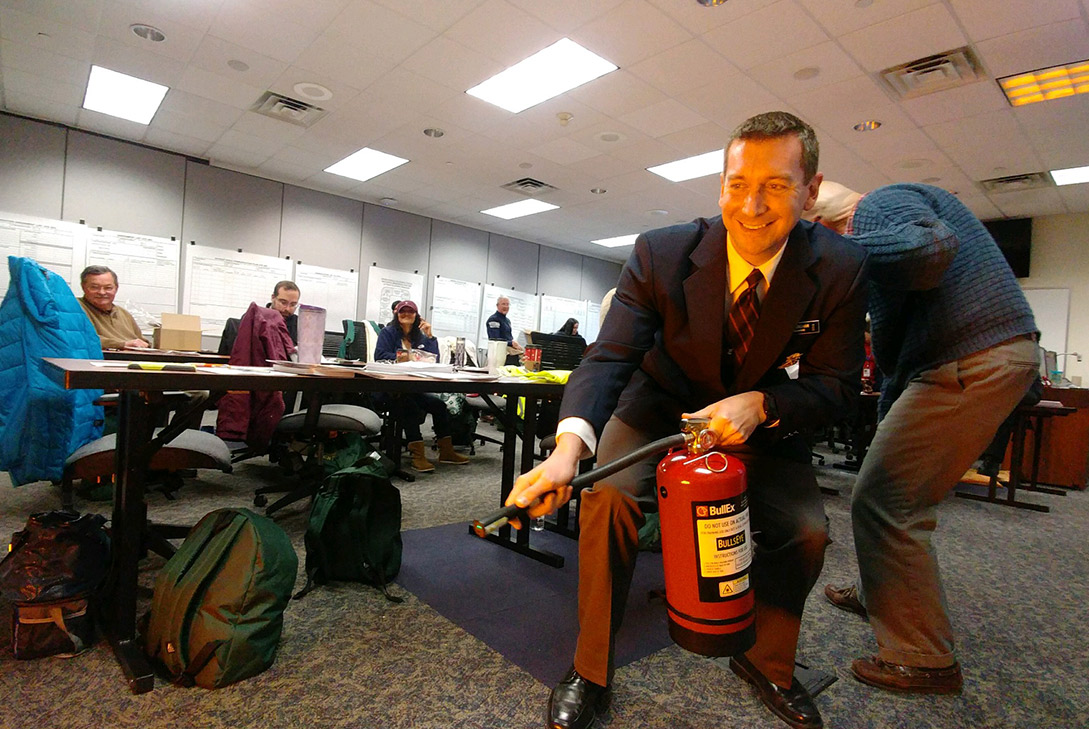 In the Workplace – equips employees with skills that enable them to react and effectively enhance existing capabilities to respond to an emergency event while at work and as CERT volunteers can participate in efforts to increase the preparedness and resilience of the workplace and community.
More Information on Starting a CERT
Independent Study
Whether you’re already in the CERT program or want to learn more before joining, these Emergency Management Institute (EMI) interactive web courses are free and available to anyone. There are many trainings available here and through your local emergency Management agency.
FEMA Independent Study IS-317: Introduction to CERT Link opens in new tab – This Independent Study (IS) course is an introduction to the CERT program.
FEMA Independent Study IS-315: CERT and the ICS Link opens in new tab – This course introduces CERT leaders to the Incident Command System (ICS), a proven management system used by emergency managers.
Follow this link for other CERT Trainings.
History of CERT
 The CERT concept was developed and implemented by the Los Angeles City Fire Department in 1985. The Whittier Narrows earthquake in 1987 underscored the area-wide threat of a major disaster in California. Further, it confirmed the need for training civilians to meet their immediate needs.
CERT became a national program in 1993. There are now CERT programs in all 50 states, including many tribal nations and U.S. territories. Each is unique to its community, and all are essential to building a Culture of Preparedness in the United States. There are over 2,700 local CERT programs nationwide and more than 600,000 people have trained since CERT became a national program.
Join CERT Today
CERT Registration/Application Form Link opens in new tab Questions? Outreach.DEMA@delaware.gov
CERT Navigation
CERT Registration/Application Form (Link opens in new tab)
CERT Program Volunteer Opportunities (Link opens in new tab)
CONTACT: Delaware Statewide CERT
CERT Sponsors
-
City of Wilmington CERT
City of Wilmington CERT
Office of Emergency Management
Emergency Operations Center
22 S. Heald Street
Wilmington, Delaware 19801 -
New Castle County CERT
New Castle County CERT
Emergency Management
3601 N. DuPont Highway
New Castle, DE 19720Phone: 302-395-2700
-
Kent County CERT
-
Sussex County CERT
CERT in Action
The below video: Community Emergency Response Team members from California, Florida, and Texas explain how they come together to prepare their communities and assist their neighbors during emergencies.